Free bacteriostatic water & free shipping with purchases over $300
As the field of longevity science continues to evolve, researchers are increasingly exploring peptides that may help unlock the mysteries of cellular aging. Among the most studied compounds is Epithalon, also known as Epitalon, a synthetic tetrapeptide developed to mimic the naturally occurring epithalamin produced by the pineal gland. Its potential role in telomere maintenance, cellular protection, and healthy aging has made it an important research peptide in modern biomedical studies.
What is Epithalon?
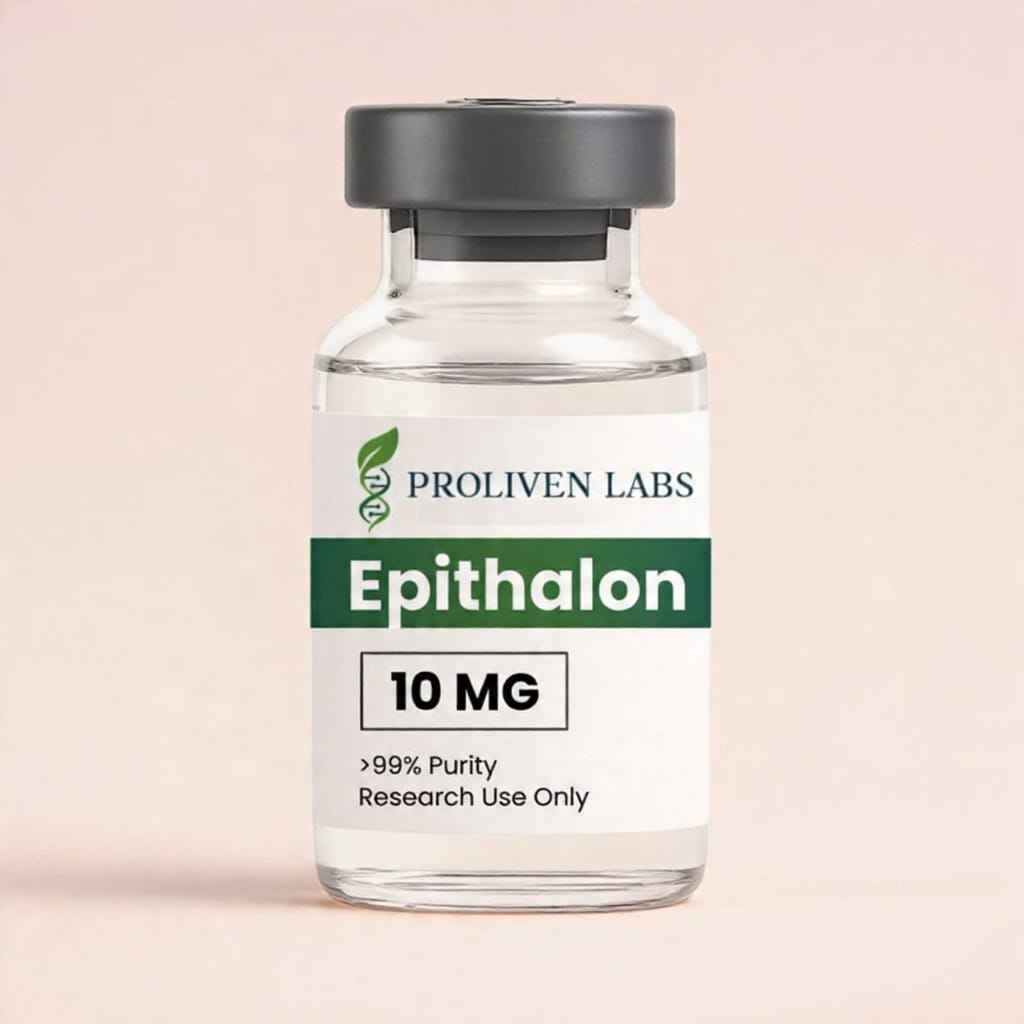
Epithalon is a research-grade synthetic peptide composed of four amino acids: Alanine, Glutamic Acid, Aspartic Acid, and Glycine. It is supplied as a high-purity lyophilized powder and is intended exclusively for in vitro laboratory research. Scientists use Epithalon to investigate the biological mechanisms involved in aging, cellular regeneration, and telomerase activation.
Why is Epithalon Important in Research?
One of Epithalon's most notable characteristics is its ability to stimulate telomerase, the enzyme responsible for maintaining telomeres. Telomeres protect the ends of chromosomes, and their gradual shortening is closely linked to cellular aging. By supporting telomere maintenance, Epithalon has become a valuable tool for studying chromosomal stability and cellular lifespan.
Research has also explored its potential role in:
Cellular aging and longevity research
Oxidative stress reduction
Melatonin production and circadian rhythm regulation
Immune system function
Neuroendocrine and epigenetic studies
Animal and laboratory studies have shown encouraging results, making Epithalon a popular peptide for age-related biomedical research.
Research Applications
Epithalon is widely used in laboratory settings to investigate age-associated diseases, cellular senescence, DNA stability, and tissue protection. Researchers also study its potential effects on oncology, immune response, and oxidative damage, helping expand scientific understanding of healthy aging.
Research Use Only
Epithalon is supplied exclusively for research purposes and is not approved for human or veterinary use. All handling, storage, and experimentation should follow institutional laboratory protocols using appropriate sterile techniques and safety precautions.
Final Thoughts
With growing interest in longevity science, Epithalon continues to attract attention for its unique role in telomerase activation and cellular aging research. Its broad research applications, combined with exceptional purity and laboratory-grade quality, make it an important peptide for scientists investigating the biological processes behind aging and cellular health.

 As the field of longevity science continues to evolve, researchers are increasingly exploring peptides that may help unlock the mysteries of cellular aging. Among the most studied compounds is Epithalon, also known as Epitalon, a synthetic tetrapeptide developed to mimic the naturally occurring epithalamin produced by the pineal gland. Its potential role in telomere maintenance, cellular protection, and healthy aging has made it an important research peptide in modern biomedical studies.