
Introduction
Modern scientific research continues to explore innovative compounds that may contribute to advancements in regenerative medicine, dermatology, cellular biology, and tissue repair. Among these compounds, GHK-Cu 100 mg has gained significant attention as a naturally occurring copper peptide studied for its potential role in cellular communication, collagen synthesis, tissue regeneration, and anti-aging research.
GHK-Cu, also known as Copper Tripeptide-1, is a naturally occurring complex made up of three amino acids: Glycine, Histidine, and Lysine (GHK) combined with a copper (II) ion. This peptide complex is naturally found in human biological fluids, including plasma, saliva, and urine, making it an important subject for researchers investigating cellular repair and regeneration.
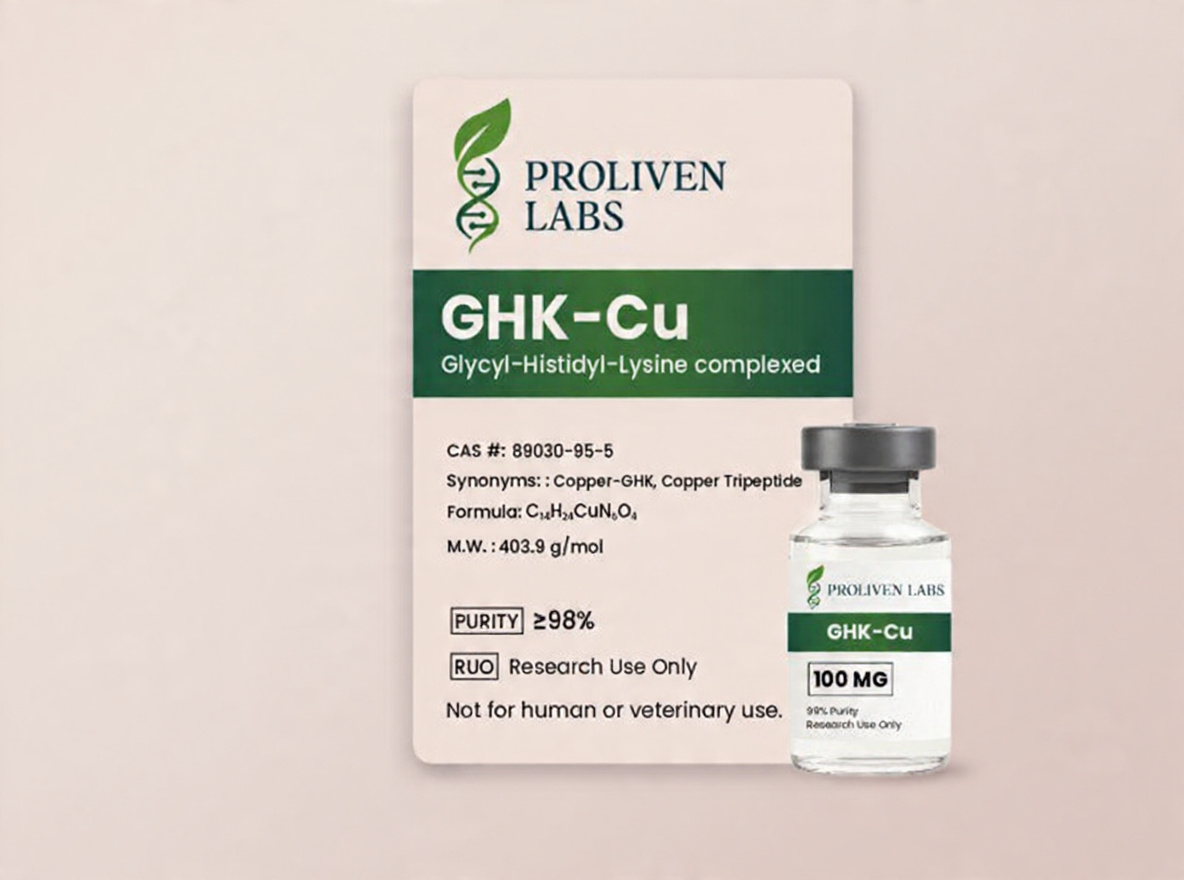
Designed for advanced laboratory research, GHK-Cu 100 mg is a premium-grade, lyophilised peptide formulation with a purity level of ≥98%, verified through third-party HPLC-MS testing. This ensures researchers receive a stable and reliable compound suitable for in vitro scientific studies.
What Is GHK-Cu 100 mg?
GHK-Cu 100 mg is a freeze-dried copper peptide formulation created specifically for laboratory research. It contains a copper-bound tripeptide complex that has been extensively studied for its interaction with biological pathways involved in skin structure, wound repair, oxidative stress response, and cellular regeneration.
The product is supplied as a blue lyophilised powder due to the presence of copper ions. Its highly stable formulation allows researchers to investigate its properties across multiple scientific fields, including regenerative medicine, dermatology, molecular biology, and biotechnology.
Key Research Applications of GHK-Cu
1. Skin Regeneration and Collagen Research
One of the most researched areas of GHK-Cu is its potential involvement in skin regeneration and extracellular matrix formation.
Studies have explored how GHK-Cu may influence fibroblast activity, which plays a crucial role in producing collagen and elastin. These proteins are essential for maintaining skin strength, elasticity, and structural integrity.
Research suggests that GHK-Cu may regulate genes associated with extracellular matrix production, providing valuable insights into skin repair mechanisms, tissue remodelling, and scar-related research.
Because collagen production naturally declines with age, scientists continue investigating copper peptides as a potential tool for understanding skin aging processes and regenerative pathways.
2. Anti-Aging and Antioxidant Research
Cellular aging is closely linked with oxidative stress and free radical damage. GHK-Cu has been studied for its antioxidant properties and its ability to influence pathways related to inflammation and cellular protection.
Research indicates that GHK-Cu may help regulate inflammatory responses by affecting cytokines such as IL-6 and TNF-α. These findings have made it an interesting compound for researchers studying aging biology, oxidative stress, and cellular health.
Scientific investigations continue to examine how GHK-Cu interacts with biological pathways associated with skin firmness, fine line formation, and overall tissue appearance.
3. Hair Follicle and Scalp Research
GHK-Cu has also become a subject of interest in hair biology research. Studies have explored its potential effects on hair follicle activity, cellular growth, and scalp microcirculation.
Researchers are investigating how copper peptides may influence follicle-related pathways and support experimental models focused on hair regeneration and follicular health.
These studies provide valuable information for understanding the relationship between peptides, cellular signalling, and hair follicle function.
4. Wound Healing and Tissue Repair Studies
Regenerative medicine researchers continue to explore GHK-Cu due to its involvement in tissue repair mechanisms.
Experimental studies suggest that GHK-Cu may support processes such as angiogenesis, which involves the formation of new blood vessels. This process is important for delivering nutrients and oxygen to damaged tissues.
Additionally, research has examined its relationship with cell migration and inflammatory regulation during the healing process, making it a valuable compound for tissue repair investigations.
5. Neuroprotective Research
Beyond skin and tissue studies, emerging research has investigated GHK-Cu’s potential role in neuroscience.
Scientists are exploring how this copper peptide may influence gene expression, DNA repair pathways, and cellular protection mechanisms related to neurological research.
Although research is still developing, GHK-Cu continues to attract interest in studies focused on neuronal health, cognitive biology, and cellular resilience.
6. Immune Modulation Studies
The ability of GHK-Cu to influence inflammatory responses has also made it valuable in immune-related research.
Researchers are studying how this peptide complex interacts with immune pathways and contributes to maintaining cellular balance. Its potential role in regulating excessive inflammatory responses makes it an interesting subject for immunological investigations.
GHK-Cu 100 mg Product Specifications
Product Name: GHK-Cu 100 mg
Form: Lyophilised freeze-dried powder
Purity: ≥98% (verified through HPLC-MS testing)
Molecular Formula: C14H24N6O4Cu
Molecular Weight: 403.9242 g/mol
CAS Number: 49557-75-7
Appearance: Blue powder
Unit Size: 100 mg per vial
Solubility: Soluble in sterile water or bacteriostatic water
Storage Temperature: 2–8°C
The high-purity formulation provides researchers with a consistent compound suitable for controlled laboratory environments.
Storage and Handling Guidelines
Proper storage is essential for maintaining peptide stability and research reliability.
Researchers should:
- Store GHK-Cu 100 mg at 2–8°C.
- Protect the product from moisture, heat, and direct sunlight.
- Avoid repeated freeze-thaw cycles.
- Store reconstituted solutions according to laboratory protocols.
- Handle the compound using appropriate protective equipment, including gloves and lab coats.
Following proper storage procedures helps preserve peptide integrity throughout research applications.
Reconstitution Information
For laboratory research purposes, GHK-Cu may be reconstituted using sterile water or bacteriostatic water according to established research protocols.
Researchers should:
- Add the recommended amount of diluent carefully.
- Gently swirl the vial until dissolved.
- Avoid vigorous shaking to reduce potential peptide degradation.
- Follow institutional guidelines for handling and application.
Intended Research Use Only
GHK-Cu 100 mg is strictly intended for in vitro laboratory research purposes only. It is not approved for human or animal consumption and should not be used as a medication, supplement, or cosmetic ingredient.
This product has not been evaluated by the FDA and is not intended to diagnose, treat, cure, or prevent any disease or medical condition. Researchers must follow all applicable laboratory safety procedures and institutional regulations when handling this compound.
Conclusion
GHK-Cu 100 mg represents an exciting area of scientific investigation due to its involvement in cellular communication, collagen research, tissue regeneration, antioxidant pathways, and regenerative medicine studies.
With its high purity, stable lyophilised formulation, and extensive research applications, GHK-Cu continues to be an important compound for scientists exploring the future of cellular biology and advanced biotechnology.