Free bacteriostatic water & free shipping with purchases over $300
L-Glutathione (GSH) is a naturally occurring tripeptide made from glutamic acid, cysteine, and glycine. It is widely studied for its role in cellular redox balance, oxidative stress, detoxification, and metabolic regulation. Because of these properties, glutathione is frequently used in laboratory research involving cellular physiology, molecular biology, and toxicology.
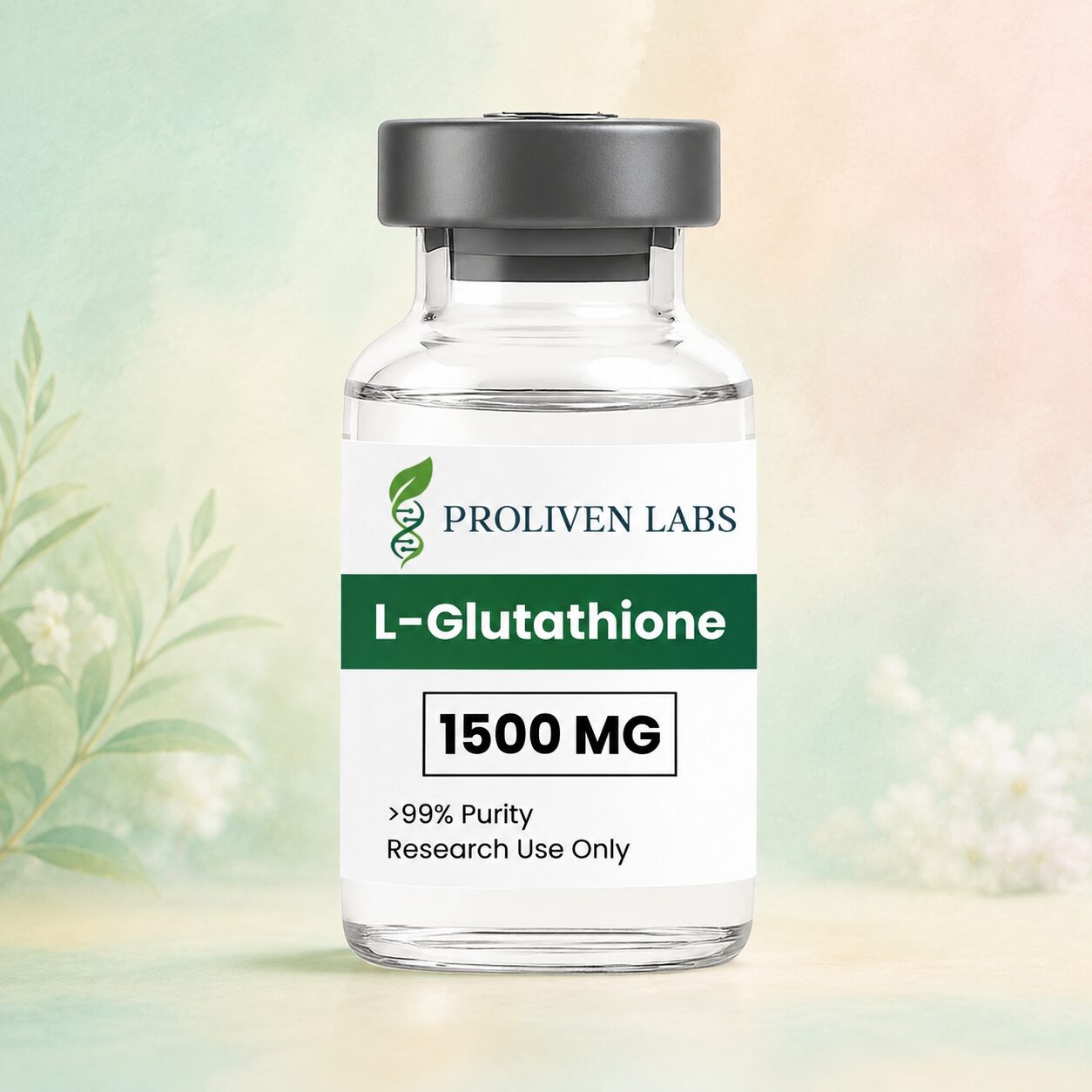
Proliven Labs offers high-purity L-Glutathione (Reduced) as a lyophilized powder with a stated purity of ≥99.6%, verified through HPLC and mass spectrometry. Each vial contains 1500 mg of material and is intended strictly for research use only.
What Makes L-Glutathione Important?
Glutathione contains a reactive thiol group that allows it to participate in important redox reactions. In experimental systems, researchers study GSH to understand how cells respond to reactive oxygen species (ROS) and maintain intracellular oxidative balance.
GSH also participates in glutathione peroxidase activity, detoxification pathways involving glutathione S-transferases, protein thiol regulation, and mitochondrial function. These mechanisms make it a valuable compound for controlled biochemical and cell-based research.
Glutathione and Peptide Research
The growing interest in peptide science has led researchers to investigate a wide range of peptide-based compounds. Studies involving high quality collagen peptides, for example, focus on collagen-related biological processes, while research into vital proteins collagen peptides represents another area of interest within collagen research.
Other research areas include peptides for weight loss, peptides for muscle growth, and peptides for skin. However, these applications involve different compounds and should not be confused with the specific research applications of L-Glutathione.
The term collagen peptides benefits generally refers to research surrounding collagen-derived peptides rather than glutathione itself. Similarly, biotech peptides encompasses a broad category of laboratory-developed peptide compounds with diverse research applications.
L-Glutathione Research Applications
L-Glutathione is commonly investigated in:
Oxidative stress and ROS research
Cellular redox biology
Detoxification and toxicology studies
Mitochondrial research
Protein thiol regulation
Cell culture and cytoprotection models
Biochemical and enzymatic assays
Researchers may adjust concentrations and exposure conditions according to the specific experimental model, cell type, and study objectives. The supplied product information notes that experimental concentrations can vary considerably, particularly in cell culture studies.
Quality, Storage, and Handling
The product is supplied as a white crystalline, lyophilized powder. It is freely soluble in water and aqueous buffer systems. For short-term storage, the material should be kept at 2–8°C, while extended storage is recommended at -20°C or below, protected from light and moisture.
Each batch undergoes analytical verification, including HPLC purity testing and mass spectrometry for molecular identification. Batch-specific COA information is also available.
Research Use Only
L-Glutathione from Proliven Labs is intended strictly for laboratory research. It is not intended for human or veterinary use and is not approved for therapeutic, diagnostic, or clinical applications. Researchers should follow appropriate laboratory safety procedures and institutional guidelines when handling the material.
Conclusion
L-Glutathione remains an important compound for investigating oxidative stress, cellular redox regulation, detoxification, and mitochondrial biology. Its high purity, lyophilized format, and analytical verification make it suitable for controlled laboratory research where consistency and reproducibility are important.

 L-Glutathione (GSH) is a naturally occurring tripeptide made from glutamic acid, cysteine, and glycine. It is widely studied for its role in cellular redox balance, oxidative stress, detoxification, and metabolic regulation. Because of these properties, glutathione is frequently used in laboratory research involving cellular physiology, molecular biology, and toxicology.
Proliven Labs offers high-purity L-Glutathione (Reduced) as a lyophilized powder with a stated purity of ≥99.6%, verified through HPLC and mass spectrometry. Each vial contains 1500 mg of material and is intended strictly for research use only.
L-Glutathione (GSH) is a naturally occurring tripeptide made from glutamic acid, cysteine, and glycine. It is widely studied for its role in cellular redox balance, oxidative stress, detoxification, and metabolic regulation. Because of these properties, glutathione is frequently used in laboratory research involving cellular physiology, molecular biology, and toxicology.
Proliven Labs offers high-purity L-Glutathione (Reduced) as a lyophilized powder with a stated purity of ≥99.6%, verified through HPLC and mass spectrometry. Each vial contains 1500 mg of material and is intended strictly for research use only.