
Description
Product Overview
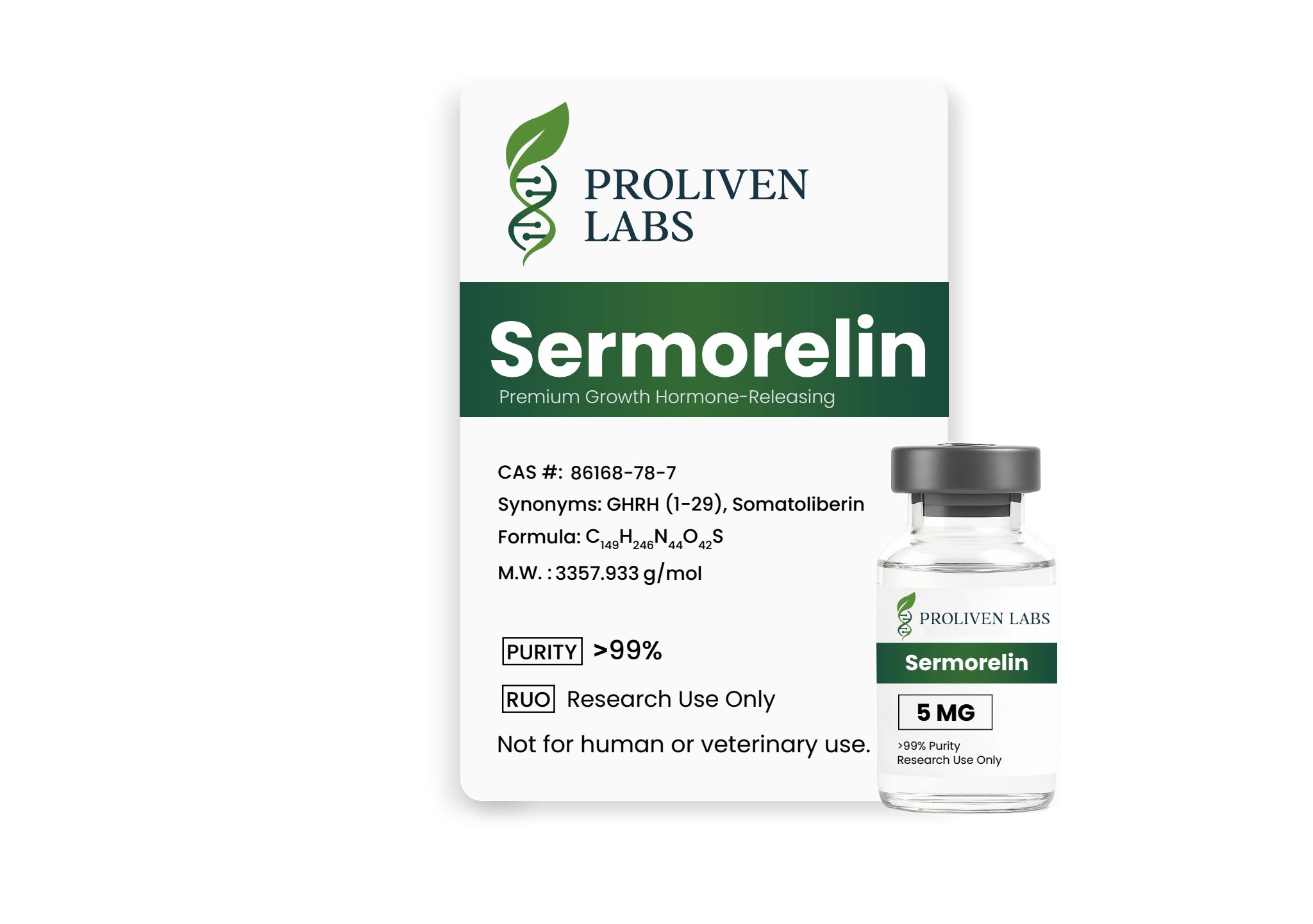
Sermorelin 5mg is a high-purity, synthetic peptide designed to stimulate the endogenous release of human growth hormone (hGH) from the anterior pituitary gland. As a truncated analog of growth hormone-releasing hormone (GHRH), Sermorelin comprises the first 29 amino acids of the full 44-amino-acid GHRH sequence, retaining its full biological activity while offering enhanced stability and ease of synthesis. With a molecular formula of C149H246N44O42S and a molecular weight of 3357.9 g/mol, Sermorelin is supplied as a sterile, non-pyrogenic, lyophilized powder for subcutaneous injection after reconstitution with bacteriostatic water (0.9% Sodium Chloride Injection, USP). This product is intended for clinical use under medical supervision to diagnose or treat growth hormone deficiencies and for research purposes to investigate pituitary function, growth hormone dynamics, and related physiological processes.
Composition
Each 5mg vial of Sermorelin contains:
- Sermorelin Acetate: 5mg of the active ingredient, a 29-amino-acid peptide (GRF 1-29 NH2) as the acetate salt, synthesized to ≥98% purity for research-grade products.
- Mannitol: 5mg, a non-active excipient used as a stabilizer to preserve peptide integrity during lyophilization and storage.
- pH Adjusters: Dibasic sodium phosphate and monobasic sodium phosphate buffers to maintain a reconstituted pH of 5.0–5.5, ensuring optimal stability and compatibility for injection.
- Diluent: Supplied with a separate 2mL or 3mL vial of Sodium Chloride Injection, USP (bacteriostatic water containing 0.9% benzyl alcohol as a preservative) for reconstitution.
The reconstituted solution is clear, colorless, and free of visible particulates, designed for single or multi-dose use depending on the protocol and storage conditions.
Mechanism of Action
Sermorelin acts as a functional analog of endogenous GHRH, binding with high specificity to GHRH receptors on pituitary somatotroph cells. This interaction triggers a cascade of intracellular signals, primarily via the cyclic AMP (cAMP) pathway, stimulating the synthesis and pulsatile release of growth hormone (GH). The resultant increase in GH levels promotes the production of insulin-like growth factor-1 (IGF-1) in the liver and peripheral tissues, which mediates anabolic effects such as cell proliferation, protein synthesis, and tissue repair, as well as metabolic effects like lipolysis and glucose regulation. Unlike exogenous GH therapy, Sermorelin preserves the hypothalamic-pituitary axis’s natural feedback mechanisms, reducing the risk of supraphysiological GH levels and associated side effects. This physiological approach makes Sermorelin a preferred choice for both therapeutic applications and research into endocrine regulation.
Intended Uses
Sermorelin 5mg is utilized in the following contexts:
- Diagnostic Testing: Administered as a single intravenous dose (1 mcg/kg body weight) to assess pituitary reserve and diagnose growth hormone deficiency in children and adults. The test measures peak GH levels post-administration to evaluate pituitary responsiveness.
- Therapeutic Applications: Indicated for the treatment of idiopathic growth hormone deficiency in prepubertal children, promoting linear growth and increased height velocity. Clinical studies demonstrate sustained growth improvements with daily subcutaneous injections (30 mcg/kg body weight) for up to 36 months.
- Off-Label Clinical Uses: Explored for acute or age-related growth hormone insufficiency in adults, with potential benefits including increased lean body mass, improved bone mineral density, enhanced muscle growth, reduced visceral fat, and better energy levels. Its use in anti-aging, bodybuilding, or athletic performance enhancement remains investigational due to limited high-quality evidence.
- Research Applications: Widely used in endocrinology and physiology research to study GH secretion, pituitary function, tissue repair, and metabolic regulation. Emerging studies suggest potential benefits in reducing cardiac remodeling post-myocardial infarction, enhancing collagen synthesis, improving joint and muscle recovery, and offering neuroprotection in models of dementia or seizure disorders.
Storage and Handling
- Lyophilized Vials: Store at 2–8°C (36–46°F) in a refrigerator, protected from light and moisture. Avoid exposure to temperatures above 25°C (77°F) or freezing.
- Reconstituted Solution: Refrigerate at 2–8°C (36–46°F) and protect from light. Stable for up to 90 days when stored properly with bacteriostatic water. Discard if the solution appears cloudy, discolored, or contains particulates.
- Safe Handling:
- Use sterile, disposable syringes and needles for each injection.
- Dispose of used syringes in a puncture-resistant Sharps container per local regulations.
- Avoid reusing needles or syringes to prevent contamination or cross-infection risk.
-
- Handle vials with clean hands or gloves to maintain sterility.
- Ensure proper disposal of all biohazardous materials in compliance with local regulations to prevent environmental contamination or injury.
Quality Assurance
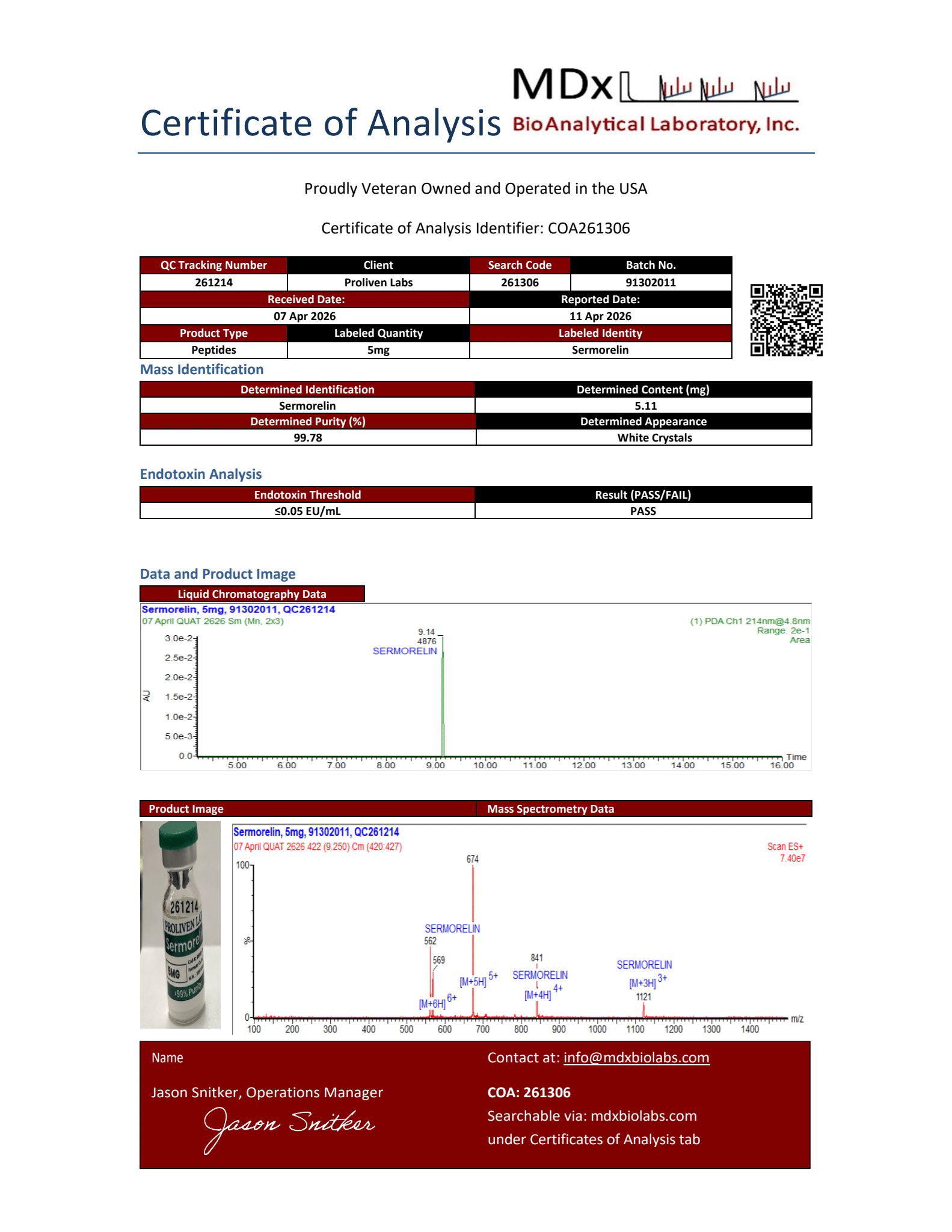
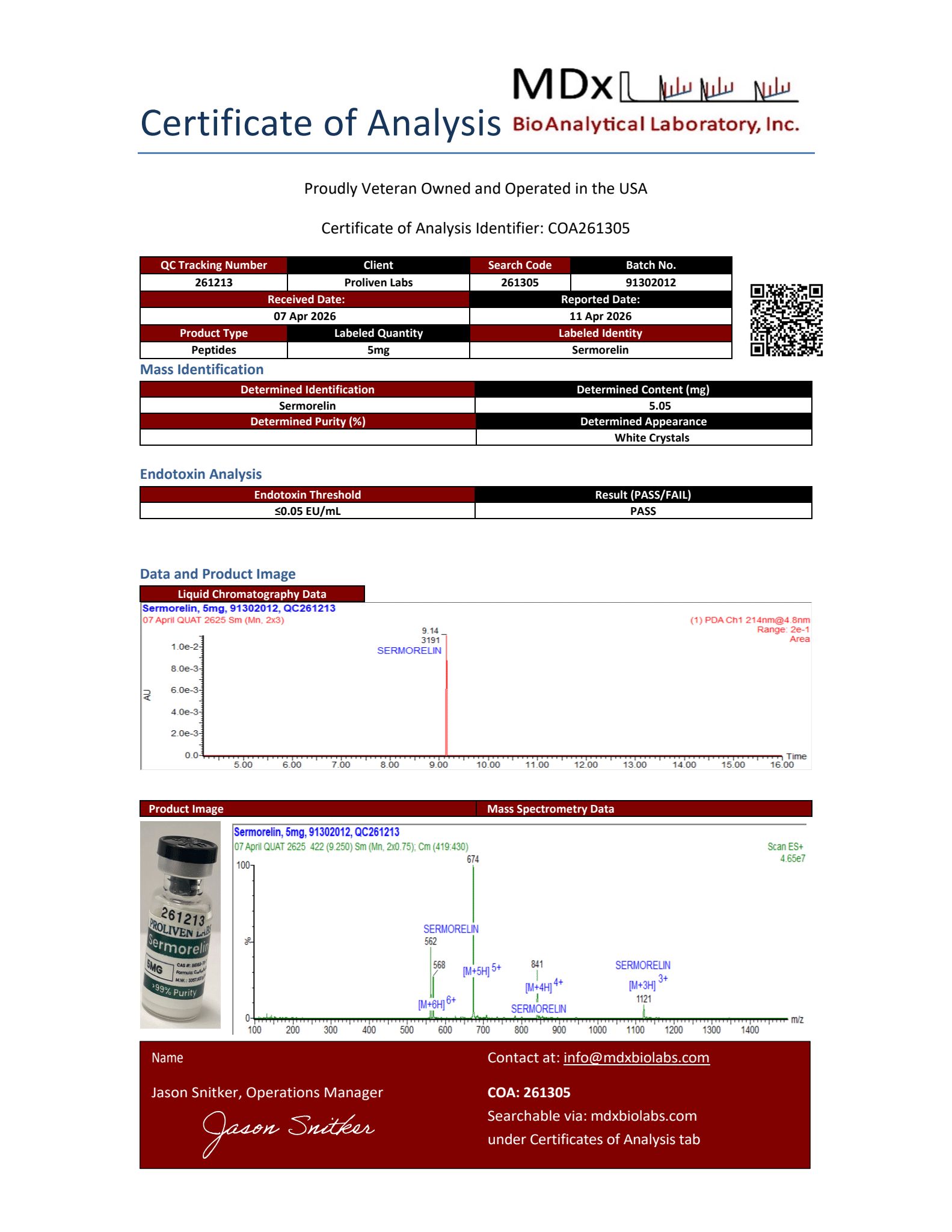
- Purity: Research-grade Sermorelin is synthesized to ≥98% purity, verified by high-performance liquid chromatography (HPLC) or mass spectrometry.
- Sterility: Manufactured in sterile, GMP-compliant facilities to ensure no microbial contamination.
- Packaging: Supplied in amber or clear glass vials to protect from light degradation, sealed with rubber stoppers and aluminum caps.
- Supplier Verification: Purchase only from reputable, accredited suppliers (e.g., FDA-registered or PCAB-accredited pharmacies) to ensure product safety, potency, and compliance with regulatory standards.
Clinical Pharmacology
- Onset of Action: GH release occurs within 10–30 minutes post-injection, with peak GH levels at approximately 1 hour. IGF-1 levels rise more gradually, peaking within 12–24 hours.
- Duration of Effect: GH secretion returns to baseline within 4–6 hours, but IGF-1 effects may persist for 24–48 hours.
- Receptor Specificity: Sermorelin selectively binds GHRH receptors, minimizing off-target effects on other hormones (e.g., prolactin, cortisol, or ACTH).
- Feedback Regulation: Maintains the hypothalamic-pituitary axis’s negative feedback, reducing the risk of GH excess compared to recombinant GH therapy.
Research and Clinical Insights
- Efficacy: Clinical trials demonstrate Sermorelin’s effectiveness in increasing height velocity in children with GH deficiency by 2–4 cm/year over baseline, with sustained benefits up to 36 months. In adults, studies show modest improvements in lean body mass (2–5%), fat reduction (1–3%), and bone density (1–2%) with 6–12 months of therapy.
- Unique Advantages: Unlike full-length GHRH (1-44), Sermorelin’s shorter sequence enhances stability and reduces production costs while retaining full bioactivity. It may upregulate GHRH receptor expression, preventing tachyphylaxis and supporting long-term efficacy.
- Emerging Applications: Research suggests potential in:
- Cardioprotection: Reducing scar tissue and improving ejection fraction post-myocardial infarction (animal models).
- Neuroprotection: Mitigating neuronal damage in models of Alzheimer’s disease and epilepsy.
- Wound Healing: Enhancing collagen deposition and tissue repair in injury models.
- Sleep Quality: Anecdotal improvements in deep sleep due to nocturnal GH release, though data are limited.
Warnings and Precautions
- Monitoring: Regular assessment of IGF-1, thyroid function, and glucose levels is recommended during therapy to ensure safety and efficacy. Baseline and periodic pituitary imaging (e.g., MRI) may be needed in patients with suspected pituitary abnormalities.
- Overdose: Symptoms of overdose may include headache, nausea, flushing, or transient hyperglycemia. No specific antidote exists; treatment is supportive (e.g., hydration, symptom management). Contact a healthcare provider immediately.
- Missed Dose: If a dose is missed, administer as soon as possible unless close to the next scheduled dose. Do not double-dose. Resume the regular schedule thereafter.
- Long-Term Use: Prolonged use (>12 months) requires monitoring for potential risks, including insulin resistance or rare hypothalamic-pituitary axis suppression. Discontinue if adverse effects outweigh benefits.
- Storage Precautions: Exposure to heat, light, or freezing may degrade the peptide, reducing efficacy. Inspect vials before use and discard if compromised.
Adverse Reactions
- Injection Site Reactions: Pain (16%), redness (8%), swelling (5%), or bruising (3%).
- Systemic Reactions: Headache (7%), flushing (4%), dizziness (3%), nausea (2%), fatigue (1%), or hyperactivity (<1%).
- Rare Events: Allergic reactions (0.1–0.5%), joint pain (0.5%), or vision changes (<0.1%). Report severe or persistent symptoms to a healthcare provider promptly.
Regulatory and Legal Considerations
- Prescription Status: Sermorelin is a Schedule IV controlled substance in some jurisdictions due to its potential for misuse in performance enhancement. A valid prescription is required for clinical use.
- Research Use: For laboratory or animal studies, Sermorelin is classified as a research chemical and is not approved for human consumption. Researchers must comply with Institutional Review Board (IRB) or Animal Care and Use Committee (ACUC) regulations.
- Anti-Doping: Sermorelin is banned by the World Anti-Doping Agency (WADA) for athletic use due to its GH-stimulating effects. Athletes should avoid use to comply with sports regulations.
Packaging and Kit Contents
- Standard Kit: Includes one 5mg Sermorelin vial.
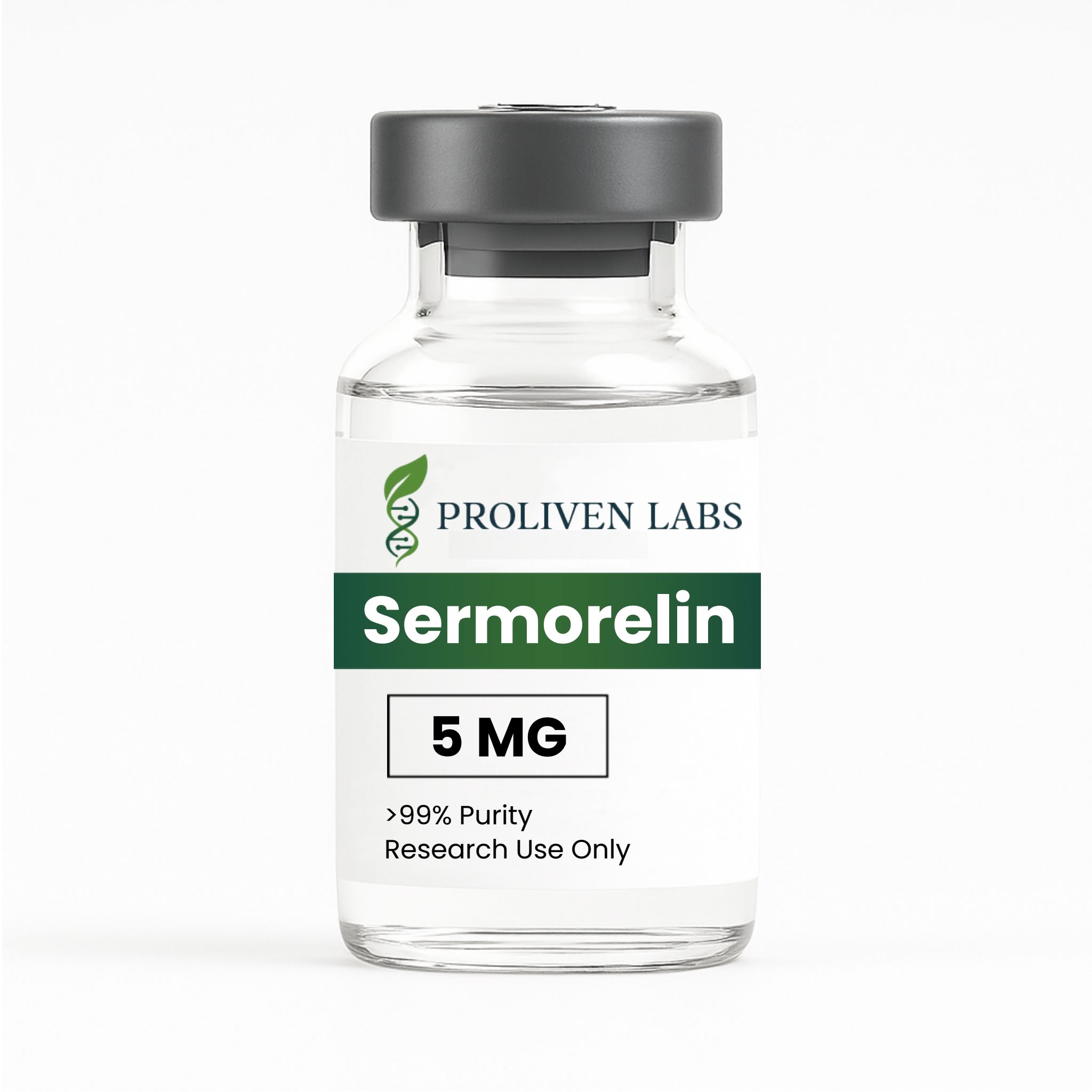
- Labeling: Vials are labeled with the product name, strength (5mg), lot number, expiration date, and storage instructions. Research-grade products include a CoA detailing purity and testing results.
Disclaimer
Sermorelin 5mg is a prescription medication for clinical use and a controlled research chemical for laboratory studies. It should only be used under the supervision of a qualified healthcare provider for therapeutic purposes or by trained researchers for in-vitro or animal studies. The FDA has not approved Sermorelin for anti-aging, bodybuilding, or performance-enhancing purposes, and such uses are considered off-label and investigational. Misuse may lead to serious health risks or legal consequences. Always consult a healthcare provider before initiating therapy and follow all applicable regulations for research use.


Reviews
There are no reviews yet.