Free bacteriostatic water & free shipping with purchases over $300
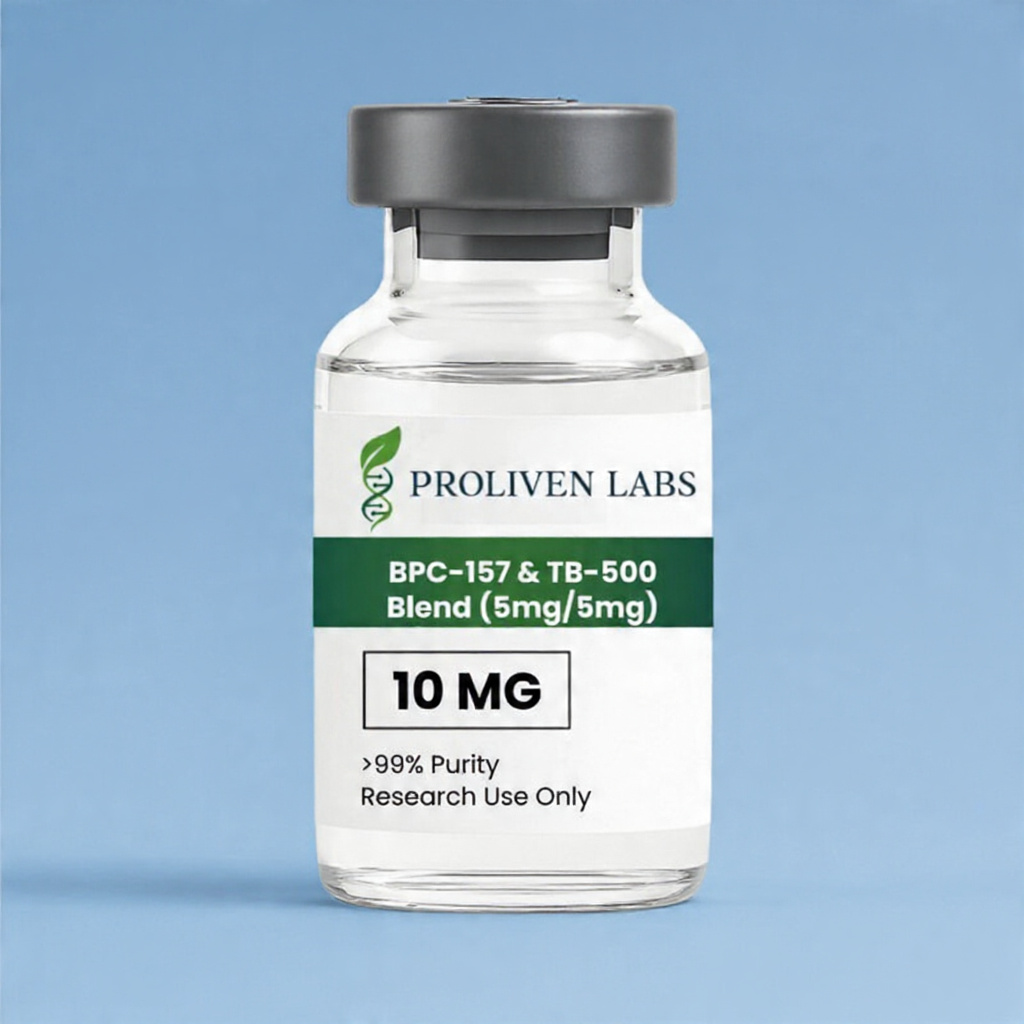
The field of peptide research continues to evolve as scientists investigate innovative compounds that may support tissue regeneration, cellular repair, and inflammation modulation. Among the most discussed research peptides today is the BPC-157 & TB-500 Blend (5mg/5mg), a combination designed to explore the complementary properties of two well-known peptides in preclinical studies.
This high-purity research formulation combines 5mg of BPC-157 and 5mg of TB-500, offering researchers a unique opportunity to study their potential synergistic effects in areas such as wound healing, musculoskeletal recovery, angiogenesis, and cellular regeneration.
Understanding the BPC-157 & TB-500 Blend
The BPC-157 & TB-500 Blend is a lyophilized peptide product created exclusively for laboratory research. Manufactured in GMP-compliant facilities and tested for purity using HPLC and Mass Spectrometry, the blend is designed to support consistent and reliable experimental outcomes.
Researchers interested in BPC-157 peptide science continue to investigate how these peptides may interact within biological systems to influence recovery pathways and tissue maintenance.
What Is BPC-157?
BPC-157, short for Body Protection Compound-157, is a synthetic peptide derived from a naturally occurring protein found in gastric juice. Over the years, it has become a major focus of regenerative research due to its potential role in supporting tissue repair and cellular protection.
Research involving BPC-157 has explored:
Tissue regeneration and remodeling
Growth factor regulation
Angiogenesis and blood vessel formation
Inflammation modulation
Gastrointestinal tissue protection
Neuroprotective mechanisms
Studies within BPC 157 peptide sciences continue to examine how this peptide may influence collagen production, fibroblast activity, and overall tissue recovery processes.
What Is TB-500?
TB-500 is a synthetic version of Thymosin Beta-4, a naturally occurring peptide involved in cellular migration and actin regulation.
Researchers have shown significant interest in TB-500 because of its potential influence on:
Cell movement and repair mechanisms
Muscle and tendon recovery
Inflammatory responses
Wound healing processes
Vascular and cardiac tissue research
Tissue flexibility and remodeling
By supporting cellular migration and structural organization, TB-500 remains an important peptide within regenerative medicine studies.
Why Researchers Combine BPC-157 and TB-500
One of the primary reasons researchers study this blend is the possibility that both peptides may complement one another through different biological pathways.
While BPC-157 is often associated with growth factor activity, collagen support, and angiogenesis, TB-500 is widely researched for its role in cell migration and tissue remodeling.
Potential areas of synergy include:
Enhanced Tissue Repair
The blend allows researchers to explore how multiple repair mechanisms may work together across muscles, ligaments, tendons, and skin tissues.
Inflammation Regulation
Both peptides are being studied for their ability to influence inflammatory pathways, making them valuable tools for examining recovery processes.
Cellular Regeneration
Scientists continue investigating how this combination may contribute to cellular repair and tissue maintenance in various experimental models.
Collagen and Structural Support
Research involving BPC-157 peptide science frequently focuses on collagen production and tissue integrity, while TB-500 studies often examine flexibility and cellular movement.
Together, these characteristics make the blend an interesting subject for regenerative research.
Potential Research Applications
The BPC-157 & TB-500 Blend is commonly used in studies related to:
Wound Healing Research
Researchers explore how the blend may influence tissue regeneration and recovery following injury.
Musculoskeletal Studies
The combination is frequently examined in models involving muscles, tendons, ligaments, and connective tissues.
Gastrointestinal Research
BPC-157 has generated significant interest in studies focused on gastrointestinal tissue integrity and recovery.
Neuroprotection Investigations
Emerging studies continue to evaluate the potential role of peptide-based approaches in nerve regeneration and neurological research.
Cardiovascular and Vascular Studies
The blend is also utilized in research examining angiogenesis and vascular tissue repair.
Product Quality and Manufacturing Standards
Quality remains a critical factor in peptide research. The BPC-157 & TB-500 Blend is manufactured in ISO-certified facilities and undergoes extensive third-party testing to verify:
≥99% purity
Accurate peptide composition
Batch consistency
Product traceability
Each vial is labeled with manufacturing details and batch information to support research integrity.
Storage and Handling
To maintain peptide stability:
Store lyophilized vials at -20°C in a dry environment.
Protect the product from light and moisture.
After reconstitution, refrigerate at 2–8°C.
Use within the recommended stability period.
Follow aseptic laboratory handling procedures at all times.
Proper storage practices help preserve peptide integrity throughout the research process.
Final Thoughts
The BPC-157 & TB-500 Blend (5mg/5mg) represents an exciting area of interest within regenerative and peptide research. By combining two widely studied compounds into a single formulation, researchers can explore their potential complementary effects on tissue repair, inflammation modulation, cellular regeneration, and recovery pathways.
As interest in BPC-157 peptide science, tissue regeneration, and advanced biotech peptides continues to grow, this blend remains a valuable research tool for laboratories investigating innovative approaches to recovery and biological repair mechanisms.

 The field of peptide research continues to evolve as scientists investigate innovative compounds that may support tissue regeneration, cellular repair, and inflammation modulation. Among the most discussed research peptides today is the BPC-157 & TB-500 Blend (5mg/5mg), a combination designed to explore the complementary properties of two well-known peptides in preclinical studies.
This high-purity research formulation combines 5mg of BPC-157 and 5mg of TB-500, offering researchers a unique opportunity to study their potential synergistic effects in areas such as wound healing, musculoskeletal recovery, angiogenesis, and cellular regeneration.
The field of peptide research continues to evolve as scientists investigate innovative compounds that may support tissue regeneration, cellular repair, and inflammation modulation. Among the most discussed research peptides today is the BPC-157 & TB-500 Blend (5mg/5mg), a combination designed to explore the complementary properties of two well-known peptides in preclinical studies.
This high-purity research formulation combines 5mg of BPC-157 and 5mg of TB-500, offering researchers a unique opportunity to study their potential synergistic effects in areas such as wound healing, musculoskeletal recovery, angiogenesis, and cellular regeneration.