Free bacteriostatic water & free shipping with purchases over $300
Peptide research has become an important area of modern laboratory science, particularly for understanding cellular communication, inflammatory responses, and immune regulation. Among the compounds being investigated, KPV peptide has attracted attention because of its relationship with melanocortin signaling and its potential influence on inflammatory pathways.
KPV, also known as Lys-Pro-Val, is a synthetic tripeptide derived from the C-terminal sequence of α-melanocyte-stimulating hormone (α-MSH). Its relatively simple structure makes it a useful research tool for studying specific biological mechanisms without the complexity of the full hormone.
What Is KPV Peptide?
KPV is a three-amino-acid peptide composed of lysine, proline, and valine. It represents a minimal bioactive fragment of α-MSH and has been investigated for its role in inflammatory and immune signaling.
Laboratory research has examined KPV in models involving cytokine regulation, NF-κB signaling, epithelial barrier function, and cellular responses to inflammatory stimuli.
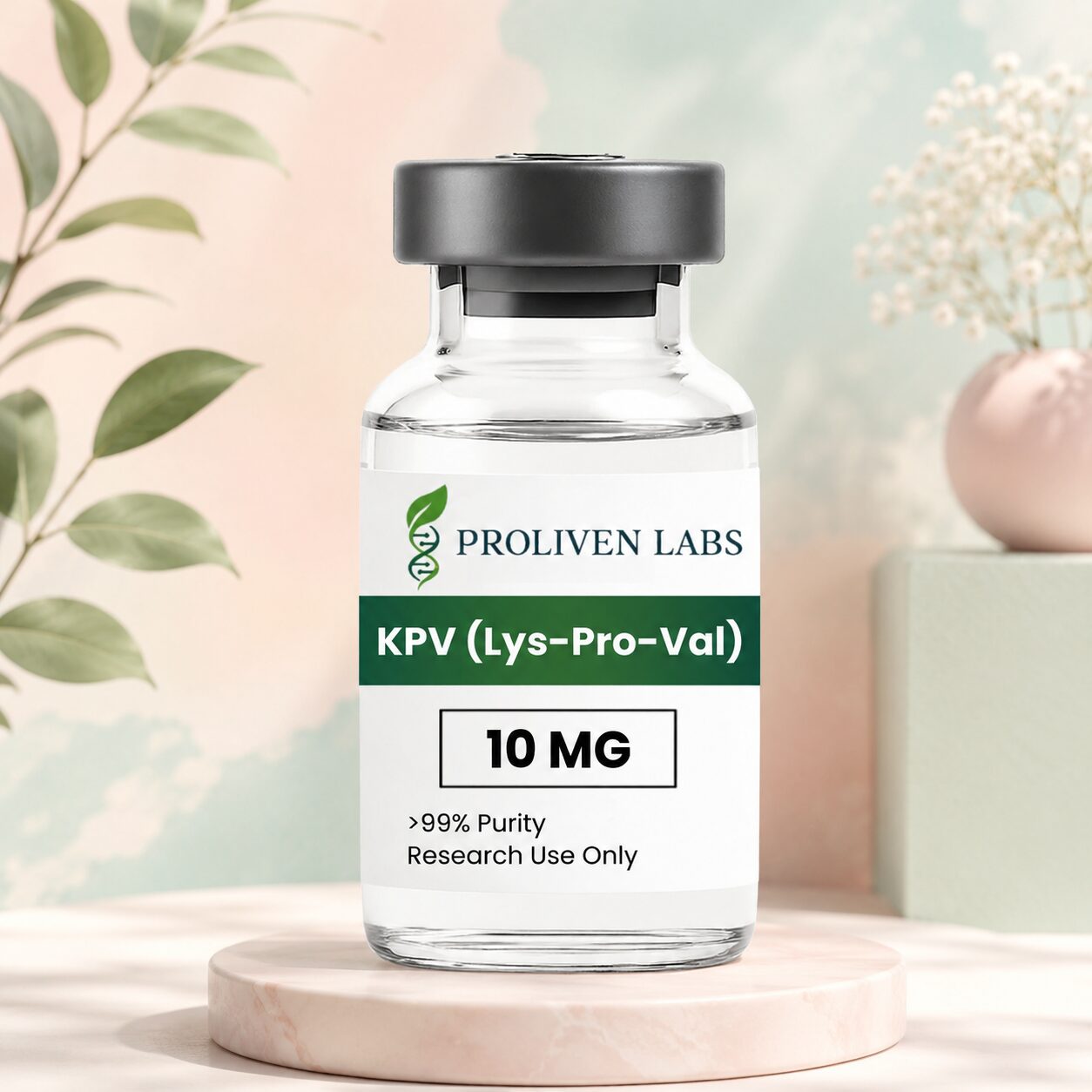
The KPV offered for research is supplied as a high-purity lyophilized powder, with purity of ≥99.5% verified through analytical testing. Each vial contains 10 mg of peptide for controlled laboratory investigations.
How Does KPV Work?
KPV is primarily researched for its influence on inflammatory signaling pathways associated with melanocortin activity.
One of the major areas of interest is the NF-κB pathway, a key molecular pathway involved in regulating inflammatory gene expression. Experimental research suggests that KPV can influence NF-κB activation and may affect the expression of inflammatory mediators.
KPV has also been investigated in relation to cytokines such as TNF-α and IL-6, making it relevant to studies examining cellular responses to inflammatory conditions.
Because research findings can vary according to experimental conditions, researchers should evaluate KPV according to the specific model, concentration, and study objectives.
Key Research Applications of KPV
1. Inflammation Research
Inflammation involves a complex network of cellular signals and cytokines. KPV provides researchers with a defined peptide for studying these pathways in controlled experimental environments.
Researchers can investigate how KPV influences inflammatory signaling and cellular responses under different laboratory conditions.
2. NF-κB Signaling Studies
NF-κB plays a central role in inflammatory gene regulation. Because KPV has been studied for its influence on this pathway, it can be incorporated into molecular biology experiments exploring inflammatory signaling.
Such studies may help researchers better understand how specific peptide fragments interact with cellular pathways.
3. Immune Response Research
As a fragment derived from α-MSH, KPV is relevant to research into melanocortin-related immune modulation. Researchers can investigate how this signaling pathway interacts with inflammatory and immune responses.
4. Epithelial and Barrier Function
KPV has also been examined in experimental models involving epithelial integrity and barrier function. This includes research related to gastrointestinal and dermal cellular systems.
These studies can provide insights into how inflammatory signaling affects cellular barriers and how specific compounds may influence these responses.
5. Cell Culture Studies
KPV is suitable for controlled in vitro research, including cell culture experiments designed to investigate inflammation, stress responses, and cellular signaling.
Researchers can evaluate different experimental conditions and study outcomes such as cytokine expression, pathway activation, and cellular behavior.
KPV Peptide Specifications
Chemical Name: Lysyl-Prolyl-Valine
Synonyms: KPV, Lys-Pro-Val
CAS Number: 67727-97-3
Molecular Formula: C₁₆H₃₀N₄O₅
Molecular Weight: 358.43 g/mol
Purity: ≥99.5%
Form: Lyophilized powder
Quantity: 10 mg per vial
Appearance: White powder
Solubility: Soluble in water and aqueous buffer systems
The product undergoes analytical verification using techniques such as HPLC for purity and mass spectrometry for identity confirmation.
Storage and Laboratory Handling
Proper storage is important for maintaining peptide integrity. The lyophilized material should be protected from light, moisture, and excessive heat.
For short-term storage, the product specifications recommend refrigeration at 2–8°C, while long-term storage may require temperatures of −20°C or below.
Researchers should use appropriate laboratory handling procedures and avoid unnecessary freeze-thaw cycles. Aseptic techniques and suitable personal protective equipment should be used during laboratory handling.
KPV Compared With Other Peptide Research
KPV belongs to a broader field of biotech peptides being investigated for different biological processes. Researchers studying peptides may encounter compounds associated with skin biology, metabolic signaling, tissue research, and cellular communication.
For example, high quality collagen peptides are commonly discussed in research surrounding collagen structure and connective tissue biology, while vital proteins collagen peptides are associated with commercially available collagen formulations rather than KPV's specific inflammatory research applications.
Similarly, searches for peptides for weight loss or peptides for muscle growth generally involve completely different compounds and biological pathways. KPV should therefore be evaluated specifically as a research compound for inflammatory and immune signaling rather than grouped with unrelated peptide categories.
The same distinction applies when discussing peptides for skin. Although KPV has been investigated in epithelial and dermal research models, its primary research interest is its relationship with inflammatory signaling and cellular responses.
Research Protocol Considerations
KPV research can vary considerably depending on the experimental model. Factors such as cell type, exposure duration, concentration, study endpoints, and experimental conditions can influence results.
In vitro studies may examine inflammatory signaling, cytokine expression, or cellular responses to specific stimuli. Preclinical research may investigate inflammatory or epithelial models under controlled conditions.
Researchers should establish appropriate controls and experimental parameters to distinguish peptide-specific effects from other variables.
Research Use Only
KPV peptide is intended strictly for laboratory research use only. It is not approved by the FDA or other regulatory authorities for human therapeutic, diagnostic, dietary, or veterinary applications.
The compound should only be handled by qualified researchers in appropriate laboratory environments and according to applicable institutional safety and regulatory requirements.
Conclusion
KPV is a small but scientifically interesting tripeptide that provides researchers with a defined tool for investigating inflammatory signaling, immune modulation, NF-κB activity, cytokine regulation, and epithelial barrier function.
Its high-purity, lyophilized formulation makes it suitable for controlled laboratory studies where researchers need a consistent peptide material. As peptide science continues to evolve, compounds such as KPV may help researchers better understand the complex relationships between cellular signaling, inflammation, and immune responses.
Disclaimer: KPV is supplied exclusively for research purposes. It is not intended for human or veterinary use and has not been evaluated or approved to diagnose, treat, cure, or prevent any disease or health condition.

 Peptide research has become an important area of modern laboratory science, particularly for understanding cellular communication, inflammatory responses, and immune regulation. Among the compounds being investigated, KPV peptide has attracted attention because of its relationship with melanocortin signaling and its potential influence on inflammatory pathways.
KPV, also known as Lys-Pro-Val, is a synthetic tripeptide derived from the C-terminal sequence of α-melanocyte-stimulating hormone (α-MSH). Its relatively simple structure makes it a useful research tool for studying specific biological mechanisms without the complexity of the full hormone.
Peptide research has become an important area of modern laboratory science, particularly for understanding cellular communication, inflammatory responses, and immune regulation. Among the compounds being investigated, KPV peptide has attracted attention because of its relationship with melanocortin signaling and its potential influence on inflammatory pathways.
KPV, also known as Lys-Pro-Val, is a synthetic tripeptide derived from the C-terminal sequence of α-melanocyte-stimulating hormone (α-MSH). Its relatively simple structure makes it a useful research tool for studying specific biological mechanisms without the complexity of the full hormone.