Free bacteriostatic water & free shipping with purchases over $300
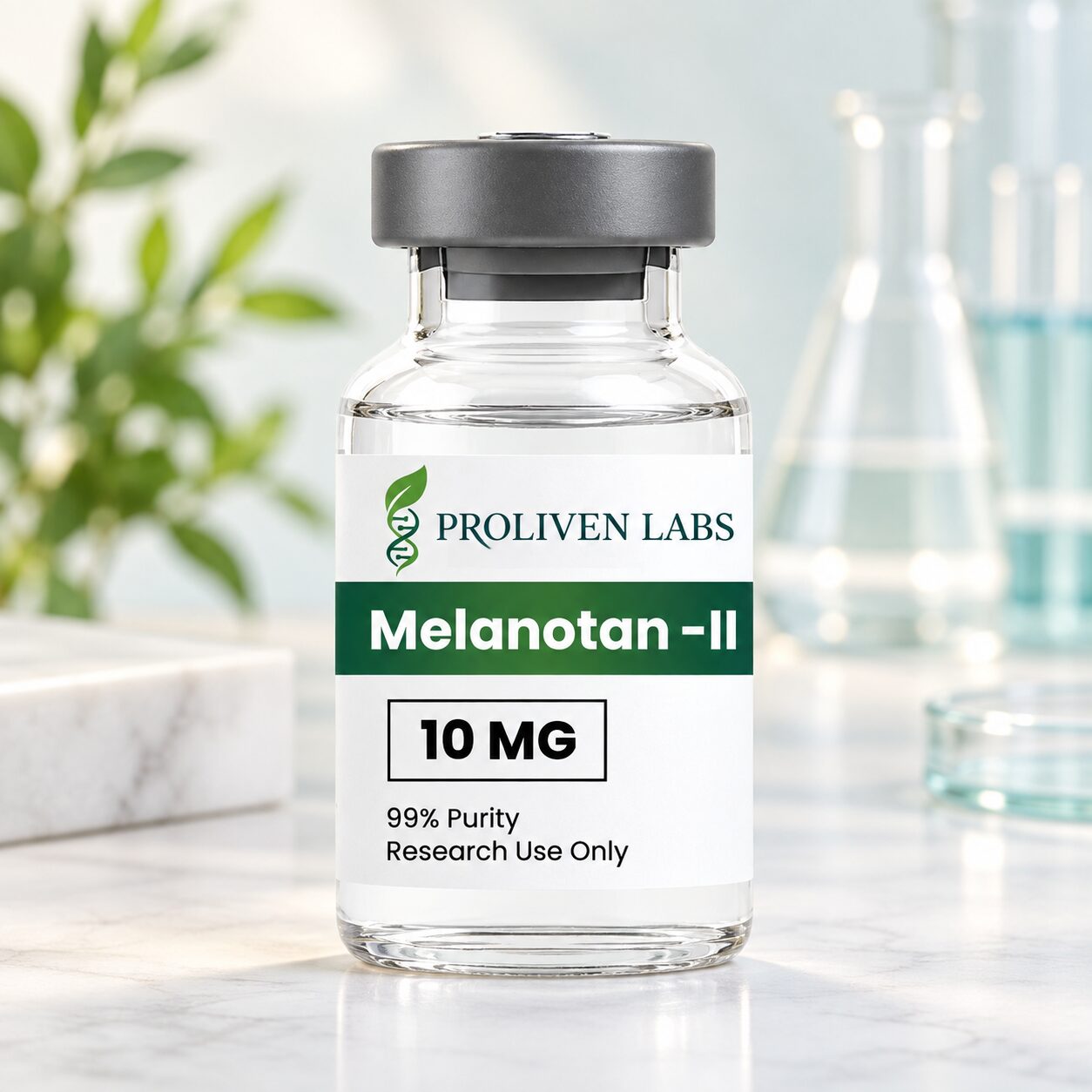
Melanotan II is a synthetic cyclic peptide developed as an analogue of alpha-melanocyte-stimulating hormone (α-MSH). Researchers originally investigated the compound for its ability to stimulate melanin production and potentially provide greater protection against ultraviolet (UV) exposure. Over time, scientific research has also explored its interaction with receptors associated with pigmentation, appetite, sexual function, metabolism, and neurological processes.
Today, Melanotan II is primarily discussed as a research compound. It is not approved by major regulatory authorities for human consumption, tanning, diagnosis, or therapeutic treatment. Researchers studying this peptide should use appropriate laboratory controls, institutional oversight, and verified research materials.
What Is Melanotan II?
Melanotan II is a synthetic cyclic heptapeptide with a structure designed to mimic certain biological effects of α-MSH. Its cyclic structure is created through a lactam bridge, which contributes to its stability and receptor-binding characteristics.
The compound has a molecular formula of C50H69N15O9 and a molecular weight of approximately 1024.198 g/mol. Research-grade Melanotan II is commonly supplied as a white to off-white lyophilized powder.
High-purity material can be evaluated using analytical techniques such as high-performance liquid chromatography (HPLC) and mass spectrometry. For laboratory research, documentation such as a certificate of analysis can help researchers verify identity and purity.
How Does Melanotan II Work?
Melanotan II interacts with several melanocortin receptors, including MC1R, MC3R, MC4R, and MC5R. These receptors are involved in different biological processes.
MC1R is particularly important in pigmentation research. Activation of this receptor can stimulate melanocytes to produce eumelanin, the darker pigment associated with tanning and pigmentation.
MC3R and MC4R have been studied in relation to energy balance, appetite, sexual behavior, and central nervous system signaling. MC5R is associated with several peripheral processes, although its biological role is still being investigated.
Because Melanotan II interacts with multiple receptor pathways, researchers continue to study its broader physiological effects.
Melanotan II and Melanin Research
One of the primary research applications of Melanotan II involves melanogenesis, or the biological process responsible for melanin production.
Laboratory and animal studies have investigated how stimulation of melanocortin receptors can increase eumelanin production. Researchers are particularly interested in understanding how pigmentation pathways respond to melanocortin signaling and how these pathways differ between individuals and experimental models.
Although increased melanin may provide some natural photoprotective effects, Melanotan II should not be considered a replacement for sunscreen or other established UV-protection methods.
Potential Research Areas
The activity of Melanotan II extends beyond pigmentation. Researchers have investigated several areas because of its interaction with melanocortin receptors.
Appetite and Metabolic Research
MC4R signaling plays an important role in appetite regulation and energy homeostasis. Experimental studies have therefore examined Melanotan II in models investigating food intake, body weight, glucose metabolism, and energy expenditure.
This research has contributed to broader scientific interest in peptides for weight loss, although Melanotan II itself is not an approved weight-management medication.
Researchers studying metabolism may compare melanocortin signaling with other peptide pathways involved in energy regulation.
Sexual Function Research
Melanotan II has also been investigated for its effects on sexual behavior and arousal. Experimental research has associated melanocortin receptor activation, particularly MC4R signaling, with sexual responses in animal models and early human research.
These findings have helped scientists better understand how melanocortin pathways interact with neurological systems involved in sexual function.
Neurological Research
Another area of interest is neuroscience. Preclinical research has examined Melanotan II in models involving neuroprotection, inflammation, nerve regeneration, and behavioral responses.
These findings remain experimental and should not be interpreted as evidence that Melanotan II can treat neurological disorders in humans.
How Does It Compare With Other Peptides?
The peptide research field includes many different compounds designed to investigate specific biological pathways. For example, researchers studying connective tissue and skin biology may encounter high quality collagen peptides, while products such as vital proteins collagen peptides are generally associated with nutritional collagen supplementation rather than melanocortin research.
Similarly, searches for collagen peptides benefits, peptides for skin, or peptides for muscle growth usually relate to completely different research or nutritional categories.
Melanotan II should therefore not be confused with collagen-derived peptides, muscle-related research compounds, or cosmetic peptide formulations. Each peptide has its own structure, receptor targets, biological activity, and intended research application.
The broader field of biotech peptides continues to expand as researchers investigate how small peptide molecules can influence cellular and molecular pathways.
Purity and Quality Considerations
For laboratory research, compound identity and purity are important considerations. Research-grade Melanotan II may be supplied as a lyophilized powder and should come with appropriate analytical documentation.
Researchers should look for quality documentation such as HPLC and mass spectrometry results, batch information, and appropriate storage and handling instructions. Products from unverified sources may present concerns related to identity, purity, contamination, or degradation.
Safety and Regulatory Status
Melanotan II is not approved for human use by regulatory agencies such as the FDA, TGA, or MHRA. Products marketed for personal tanning, bodybuilding, or therapeutic purposes should not be confused with properly controlled laboratory research materials.
Because Melanotan II affects multiple melanocortin receptors, researchers must consider potential cardiovascular, neurological, metabolic, and pigmentation-related effects when designing experimental studies.
Laboratory work should be conducted under appropriate institutional and ethical guidelines. Researchers should also follow applicable regulations for handling, storage, testing, and disposal.
Storage and Handling
Lyophilized peptide materials should generally be protected from excessive heat, moisture, and light. Research laboratories should follow the supplier’s validated storage recommendations and maintain appropriate controls to preserve sample integrity.
Once prepared for an experiment, the stability of the resulting solution can differ from that of the original lyophilized material. Researchers should therefore follow documented laboratory protocols and supplier-specific stability information rather than relying on generalized handling practices.
Final Thoughts
Melanotan II remains an interesting compound for investigating melanocortin receptor biology. From pigmentation and melanin production to appetite, sexual function, metabolism, and neurological pathways, research has explored a wide range of potential biological effects.
However, its experimental nature is important to emphasize. Melanotan II is not an approved human medicine or tanning treatment. Its use should remain limited to properly controlled laboratory research conducted by qualified researchers.
As peptide science continues to develop, compounds such as Melanotan II may help researchers better understand complex receptor systems and biological pathways. At the same time, rigorous testing, accurate product characterization, and responsible research practices remain essential.

 Melanotan II is a synthetic cyclic peptide developed as an analogue of alpha-melanocyte-stimulating hormone (α-MSH). Researchers originally investigated the compound for its ability to stimulate melanin production and potentially provide greater protection against ultraviolet (UV) exposure. Over time, scientific research has also explored its interaction with receptors associated with pigmentation, appetite, sexual function, metabolism, and neurological processes.
Today, Melanotan II is primarily discussed as a research compound. It is not approved by major regulatory authorities for human consumption, tanning, diagnosis, or therapeutic treatment. Researchers studying this peptide should use appropriate laboratory controls, institutional oversight, and verified research materials.
Melanotan II is a synthetic cyclic peptide developed as an analogue of alpha-melanocyte-stimulating hormone (α-MSH). Researchers originally investigated the compound for its ability to stimulate melanin production and potentially provide greater protection against ultraviolet (UV) exposure. Over time, scientific research has also explored its interaction with receptors associated with pigmentation, appetite, sexual function, metabolism, and neurological processes.
Today, Melanotan II is primarily discussed as a research compound. It is not approved by major regulatory authorities for human consumption, tanning, diagnosis, or therapeutic treatment. Researchers studying this peptide should use appropriate laboratory controls, institutional oversight, and verified research materials.