
Description
Product Overview:
5-Amino-1MQ (5-Amino-1-Methylquinolinium) is a small-molecule research compound studied primarily for its activity as an inhibitor of nicotinamide N-methyltransferase (NNMT), an intracellular enzyme involved in methylation balance, nicotinamide metabolism, and cellular energy regulation.
NNMT has become a growing area of interest in metabolic and adipocyte biology due to its role in regulating pathways associated with:
- Cellular energy expenditure
- NAD+ precursor utilization
- Methyl donor metabolism (SAM-dependent pathways)
- Adipocyte function and lipid storage signaling
- Metabolic efficiency in preclinical models
By inhibiting NNMT activity, 5-Amino-1MQ has been investigated in experimental systems for its effects on intracellular metabolism and fat-cell biology.
The compound offered by Proliven Labs is supplied as high-purity (≥99.5%) lyophilized powder, manufactured for reproducibility in controlled research settings.
Common research areas include:
- NNMT inhibition studies
- Adipocyte metabolism models
- Cellular NAD+ pathway research
- Energy expenditure signaling studies
- Obesity and metabolic dysfunction models
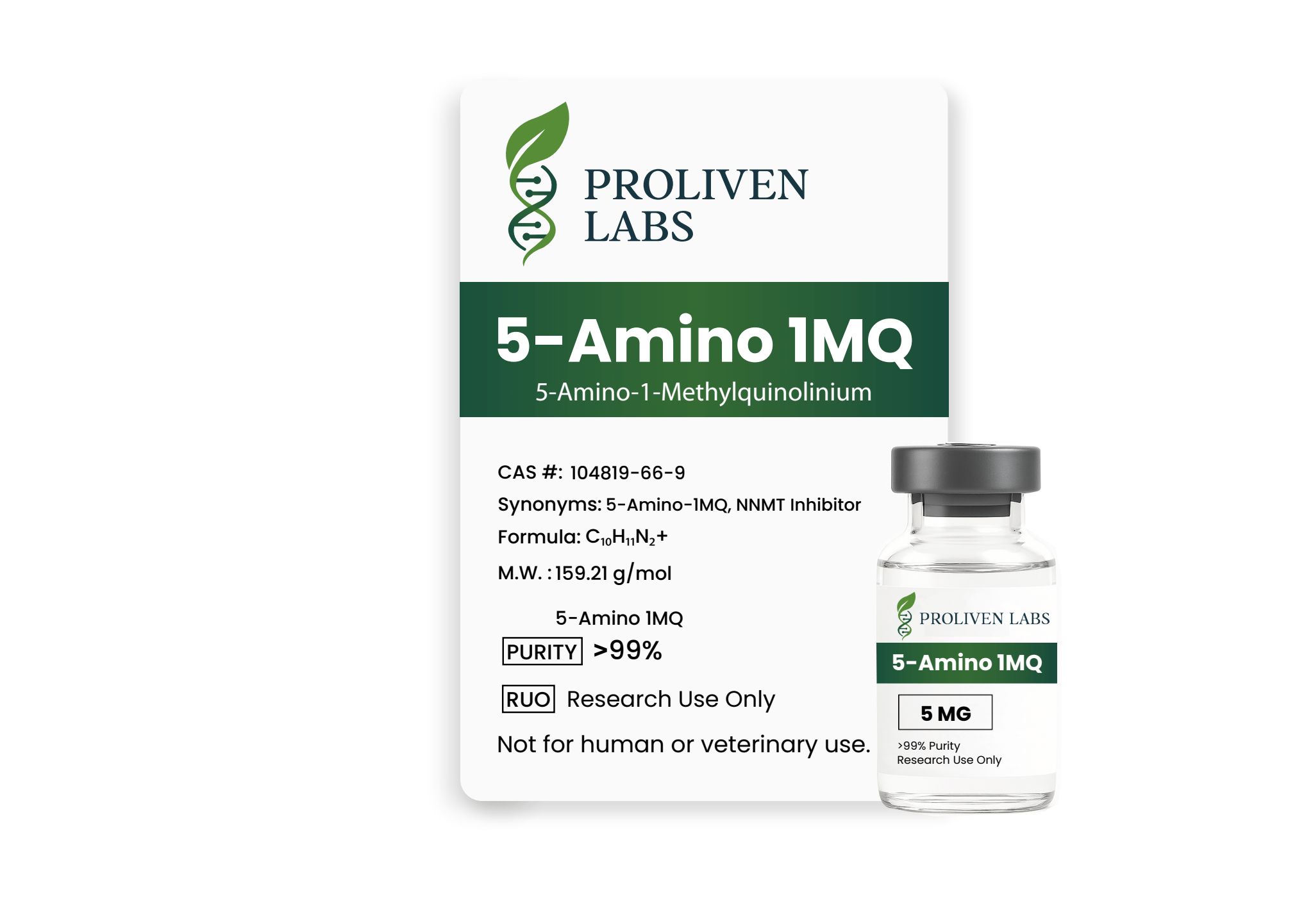
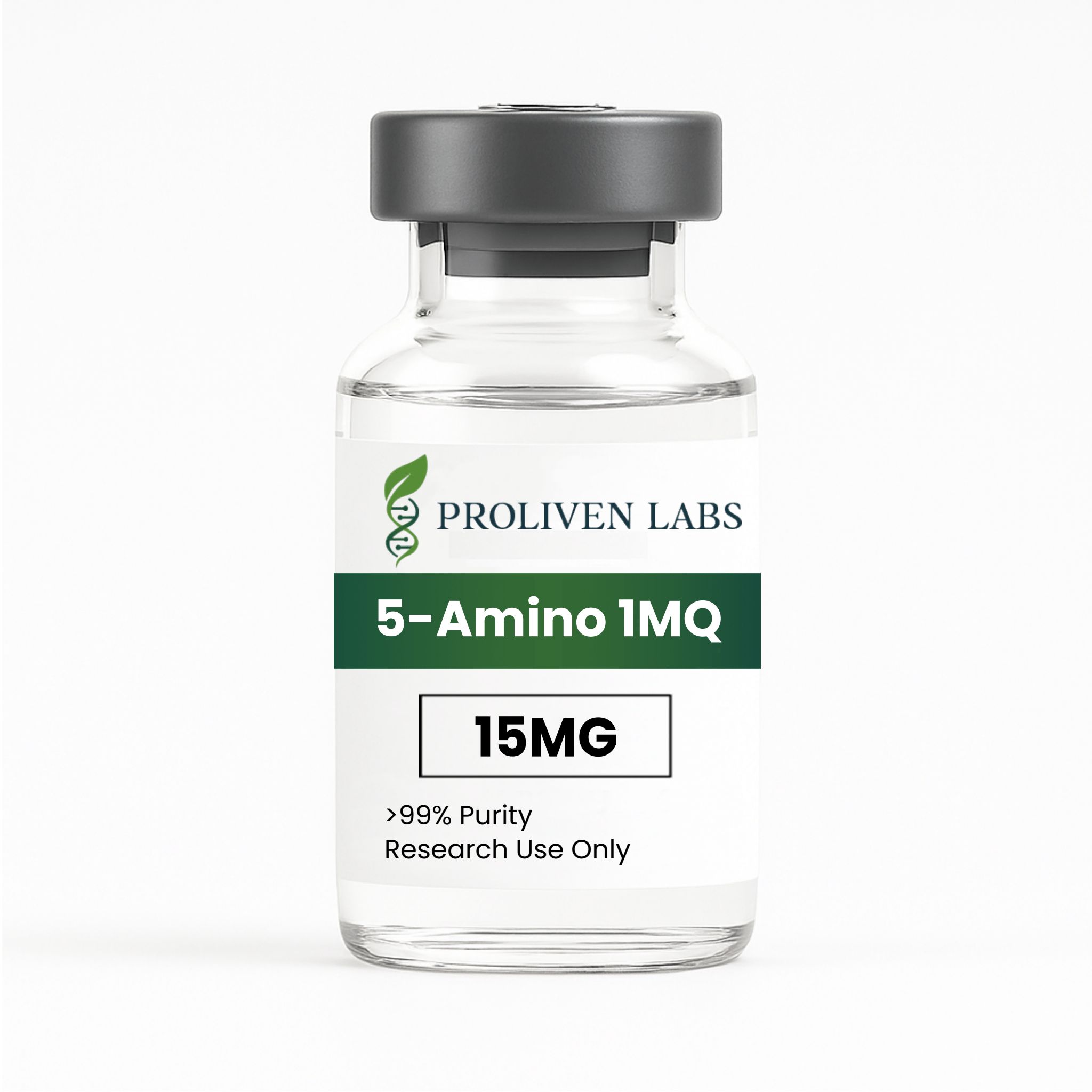
Each vial contains 5mg of lyophilized 5-Amino-1MQ, verified through batch-specific analytical testing.
Strictly for Research Use Only (RUO). Not for human or veterinary use.
Peptide Specifications:
Chemical Name:
5-Amino-1-Methylquinolinium
Synonyms:
5-Amino-1MQ
NNMT Inhibitor
CAS Number:
104819-66-9 (verify with supplier COA before publication)
Molecular Formula:
C₁₀H₁₁N₂⁺
Molecular Weight:
159.21 g/mol
Purity:
≥99.5% (HPLC verified)
Form:
Lyophilized powder
Quantity:
5mg per vial
Appearance:
Off-white to pale yellow powde
Solubility
Soluble in aqueous laboratory solvents and buffered systems appropriate for experimental design.
Suitable solvents may include:
- Sterile water
- Buffered aqueous solutions
- DMSO (where applicable for in vitro systems)
Storage Conditions
Short-term:
2–8°C
Long-term:
-20°C or below
Protect from:
- Moisture
- Heat
- Light
Analytical Verification
Each batch undergoes:
- HPLC purity verification
- Mass spectrometry identity confirmation
- Batch traceability documentation
Research Applications
NNMT Inhibition Research
5-Amino-1MQ is widely studied as a tool compound for evaluating NNMT activity in metabolic systems.
Adipocyte Biology Models
Used in experimental models examining:
- Fat-cell metabolism
- Lipid accumulation signaling
- Cellular energy expenditure pathways
NAD+ Metabolism Research
Because NNMT intersects with nicotinamide utilization pathways, 5-Amino-1MQ is frequently investigated in studies related to:
- NAD+ precursor dynamics
- Cellular redox regulation
- Energy metabolism
Methylation Pathway Research
NNMT consumes methyl donors, making this compound useful in:
- SAM/SAH pathway research
- Cellular methylation balance studies
- Metabolic signaling investigations
Obesity & Metabolic Dysfunction Models
Preclinical research has explored 5-Amino-1MQ in models involving:
- Adiposity
- Weight regulation
- Metabolic efficiency
Mechanisms of Action
Selective NNMT Inhibition
5-Amino-1MQ inhibits nicotinamide N-methyltransferase (NNMT).
NNMT normally catalyzes:
Nicotinamide + SAM → 1-Methylnicotinamide + SAH
By inhibiting this pathway, 5-Amino-1MQ alters metabolic signaling relevant to:
- Energy expenditure
- Nicotinamide utilization
- Methyl donor conservation
Adipocyte Metabolic Effects
Experimental models suggest NNMT inhibition may influence:
- Fat-cell energy utilization
- Lipid storage signaling
- Cellular metabolic efficiency
NAD+ Pathway Relevance
Research suggests indirect effects on pathways related to:
- Nicotinamide salvage
- NAD+ precursor availability
- Mitochondrial metabolic signaling
Preclinical Research Data
Murine Adiposity Models
Preclinical studies evaluating NNMT inhibition have reported effects involving:
- Reduced fat mass accumulation
- Altered adipocyte metabolism
- Increased energy expenditure markers
Experimental outcomes vary by:
- Dose
- Duration
- Model system
- Route of administration
Cellular Models
In vitro studies have demonstrated:
- Target engagement at NNMT
- Metabolic pathway modulation
- Altered adipocyte signaling profiles
Reconstitution & Handling
Reconstitution
5-Amino-1MQ is supplied as lyophilized powder.
Typical research reconstitution:
- 1–3 mL sterile solvent
- Swirl gently
- Do not shake
Post-Reconstitution Storage
Store reconstituted material at:
2–8°C
Use according to study-specific stability requirements.
Avoid repeated freeze-thaw cycles.
Research Protocols & Dosing Considerations
Research involving 5-Amino-1MQ varies substantially by model.
In Vitro Studies
Variables commonly adjusted:
- Concentration
- Exposure duration
- Cell type
- Endpoint measurements
Preclinical Studies
Variables commonly adjusted:
- Dose
- Delivery route
- Study duration
- Experimental objective
Appropriate controls should be used to isolate compound-specific effects.
Research Protocols & Considerations
Research involving 5-Amino-1MQ varies significantly depending on experimental design, model system, and study objectives.
In Vitro Research
5-Amino-1MQ is commonly utilized in cell-based systems investigating:
- NNMT inhibition kinetics
- Adipocyte metabolism and lipid signaling
- Nicotinamide pathway modulation
- Cellular methylation dynamics (SAM-dependent pathways)
- Metabolic stress and mitochondrial function models
Typical experimental variables may include:
- Cell type (e.g. adipocytes, hepatocytes, metabolic cell lines)
- Exposure duration
- Compound concentration
- Target engagement endpoints
- Metabolic biomarker measurements
Preclinical Models
In animal research, 5-Amino-1MQ has been studied in models involving:
- Adiposity and body composition research
- Energy expenditure models
- Metabolic dysfunction investigations
- NNMT pathway modulation studies
Experimental parameters vary based on:
- Route of administration
- Dose selection
- Study duration
- Tissue targets
- Experimental endpoints
General Research Considerations
Researchers should consider:
- Concentration-dependent effects, which may vary by model system
- Target engagement verification, particularly in NNMT pathway studies
- Solubility and stability considerations during study design
- Appropriate controls to isolate compound-specific effects
- Potential interactions with methylation or NAD+-related pathways when used alongside other metabolic research compounds
Important
This product is intended strictly for Research Use Only (RUO) and is not intended for human or veterinary use.
Safety & Regulatory Notes
Research Use Only (RUO)
This product is intended exclusively for laboratory research applications.
It is not intended for:
- Human use
- Veterinary use
- Diagnostic use
- Therapeutic use
- Clinical administration
Safety Profile
Safety data for 5-Amino-1MQ is derived primarily from:
- In vitro research
- Preclinical animal studies
- Experimental metabolic pathway investigations
Safety outcomes may depend on:
- Experimental concentration
- Exposure duration
- Model system
- Route of administration in preclinical studies
No established safety profile exists for clinical or non-research use.
Handling Precautions
Use appropriate laboratory PPE, including:
- Gloves
- Eye protection
- Protective laboratory attire
Avoid:
- Inhalation
- Ingestion
- Direct skin or eye exposure
Use standard laboratory handling protocols.
Regulatory Status
5-Amino-1MQ is:
- Not approved by the U.S. FDA for therapeutic use
- Not approved for diagnosis or treatment of disease
- Not approved for human consumption
- Intended solely as a research compound
Researchers are responsible for compliance with all applicable regulations governing handling and use.
Quality Assurance
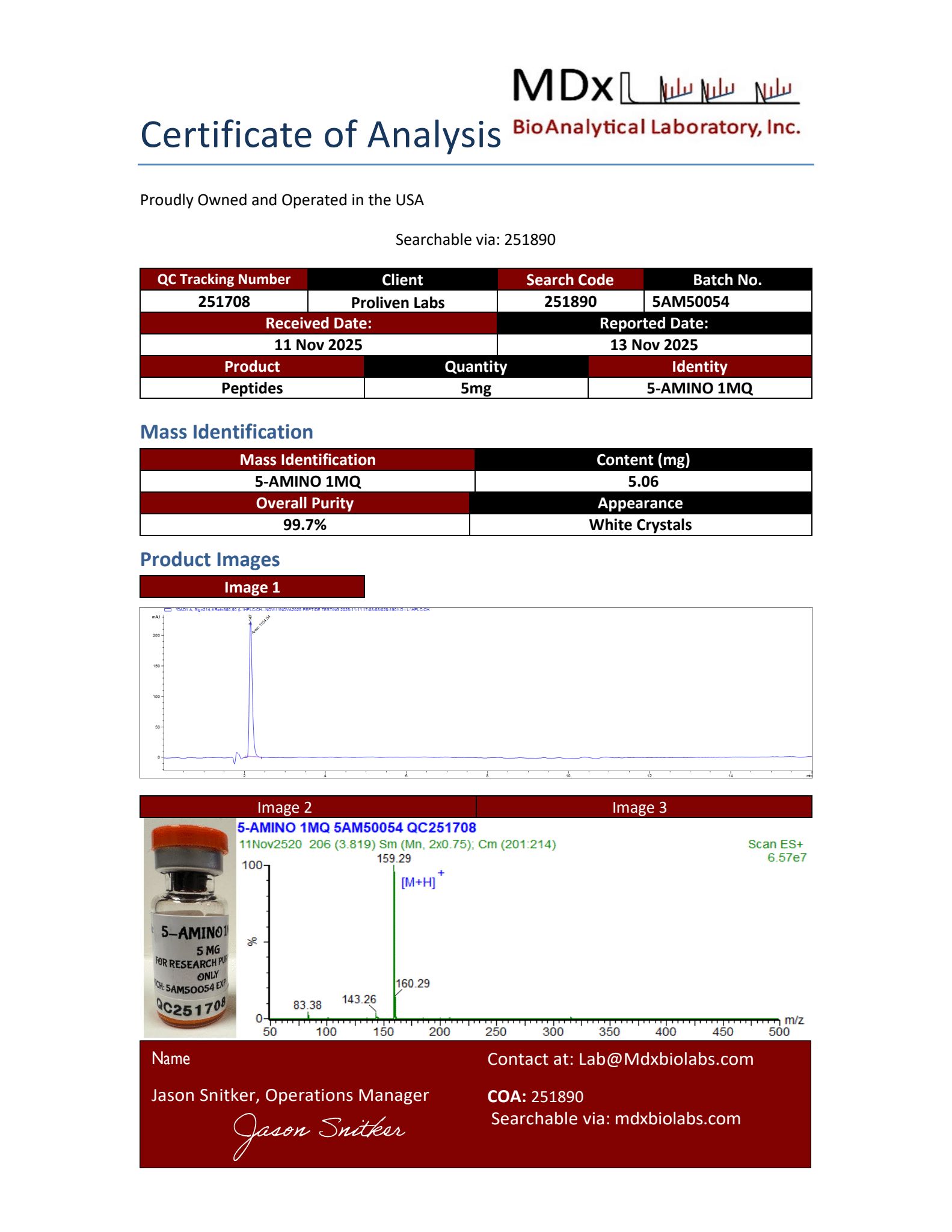
Each batch of 5-Amino-1MQ undergoes analytical testing to help ensure identity, purity, and batch consistency.
Testing Includes
- High-Performance Liquid Chromatography (HPLC)
- Purity verification (≥98%)
- Mass Spectrometry (MS)
- Molecular identity confirmation
Contaminant Screening
Batch testing may include screening for:
- Heavy metals
- Residual solvents (where applicable)
- Microbial impurities
- Synthesis-related contaminants
Certificate of Analysis (COA)
Batch-specific Certificate of Analysis (COA) available for:
- Identity confirmation
- Purity data
- Analytical testing results
- Batch traceability
COA Lookup Available → [Insert COA Lookup Link]
Manufacturing Standards
Produced under controlled synthesis conditions to support:
- Batch consistency
- Stability
- Reproducibility in research environments
Batch Traceability
Each vial includes a unique batch number to support:
- Quality tracking
- Analytical verification
- Lot-specific traceability
Disclaimer:
This product is intended strictly for research use only (RUO).
It is not intended for human or veterinary use and is not approved for:
- Diagnosis
- Treatment
- Cure
- Prevention of any disease
By purchasing this product, the user acknowledges that:
- The material will be used solely for laboratory research
- The user is qualified to handle research chemicals
- All use complies with applicable regulations
The purchaser assumes full responsibility for proper handling, storage, and use.


Reviews
There are no reviews yet.